









About
Road Rescue

The History Of
Road Rescue

1976
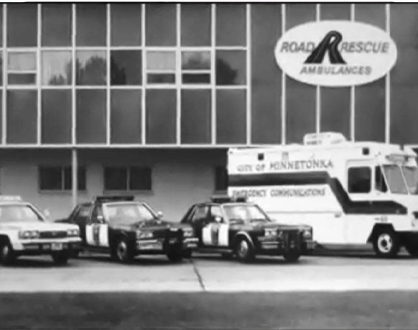
Bill Huestis, owner and operator of the LP Gas Company in St. Paul, Minnesota, purchased the exclusive rights to the name Road Rescue and all design drawings from a small fabrication shop. Bill promoted Road Rescue as a local provider that could build a safe, spacious, customizable module ambulance. With Bill’s business expertise, he focused on marketing features produced by Road Rescue that other ambulance manufacturers were not typically offering.
1978
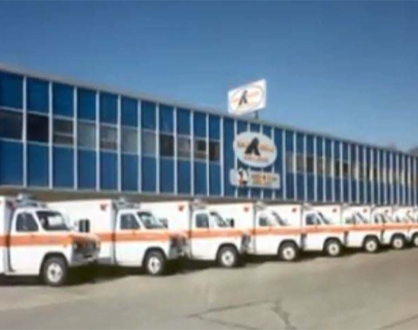
Bill Huestis purchased the building and property at 1133 Rankin Street, St. Paul, Minnesota, directly across from Pearson’s Candy Company, to expand operations and manufacturing.
1984
As Road Rescue’s reputation grew, many customers began asking for a lower price point ambulance. As a result, the brand Med‐Star was born. Two models were produced, the Aero‐Star and Life Guard. These models were only offered on a short wheelbase chassis. The differences were extruded corner posts and door jambs, and a crisscross wall frame design which reduced labor without impacting safety. Unfortunately, the Med-Star brand wasn’t viewed by consumers as a true Road Rescue product. With few orders received for both new models, Road Rescue decided to discontinue the Med-Star brand.
1990
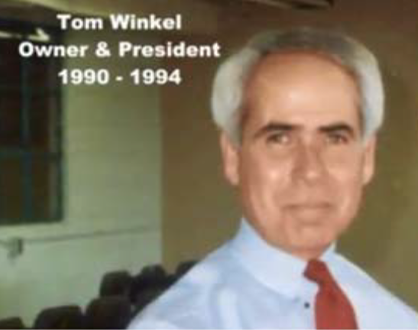
As he was reaching his later years in life, Bill Huestis made the decision to sell Road Rescue to business entrepreneur, Tom Winkel. To gain market share, Road Rescue reintroduced the Aero-Star model under the Road Rescue brand. This would mean that the corner extrusion and door frames were built as a ProMedic conversion including formed angled corner panels and door jambs.

1994
Road Rescue was sold to former FirstBank CEO, Norb Conzemius. Norb’s goal in purchasing Road Rescue was to increase efficiencies through organizing various operations in the manufacturing process.
1995
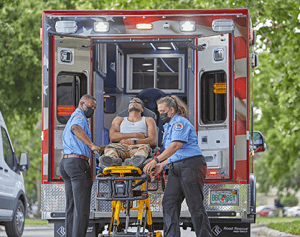
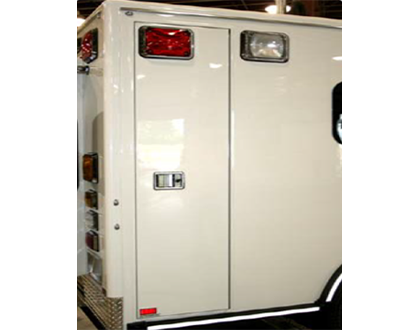
Road Rescue strategically relocated the rear exit door handles to the upper portion of the ambulance doors, creating a more ergonomic and safer design for EMS personnel.
1996
Road Rescue celebrated its 20th anniversary with an updated look to the building exterior along with a modernized Road Rescue logo.
1998
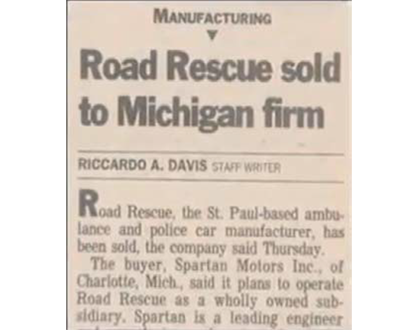
Norb Conzemius succeeded in transforming Road Rescue to a point where he felt comfortable selling the thriving business. Spartan Motors expressed an interest in purchasing the company. Spartan Motors assured Norb Conzemius that they had the resources to bring Road Rescue to the next level. The company was then sold to publicly traded Spartan Motors.
2000
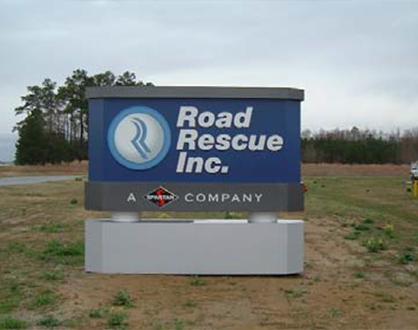
Spartan Motors selected Chuck Drake as Road Rescue CEO. Chuck’s vision was to broaden Road Rescue’s product line by offering Type 2 vans. This spurred the opening of a second Road Rescue facility in Marion, South Carolina.
2006
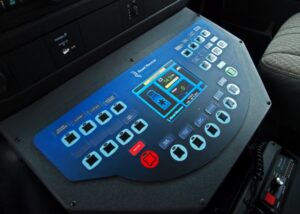
Road Rescue paired with Class 1, an Akron brass company, to assist with the development of Smart Display II—software that made it easier to program the electrical system during manufacturing.
2008
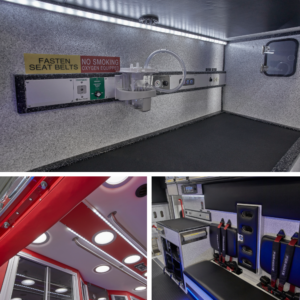
As part of the ER-inspired design, device rails in the action area, curbside squad bench and ceiling were introduced.
2009
The new design was released at the FDIC show. This new design included roof radius changes from a 5" high single-wall extrusion to a 3" high triple wall extrusion, HVAC improvements, revisions to the hidden hinge door design, the addition of the ceiling device rail and an improved rub rail design.

2010
Allied Specialty Vehicles had struck a deal to purchase just the brand name from Spartan Motors and not the facility. November of 2010 the relocation of Road Rescue from Marion, South Carolina to Winter Park, Florida took place. At this time, the MetroMedic conversions were born to help dealerships with revenue while the production line was getting ready to run three units per week.
2011
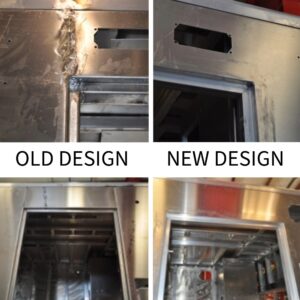
The relocation to Winter Park, Florida, gave Road Rescue the large tooling needed to make each side-body panel a one-piece design. This reduced a lot of exterior welding of body seams due to not having large enough tooling in previous years. With this change, the need to form door jambs into each of the 4-piece body panels was eliminated.
2012
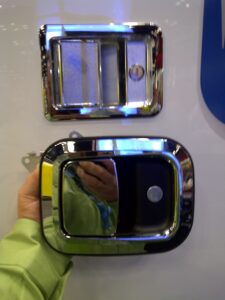
The module entrance doors were updated and now featured two-point, flush-mounted TriMark® paddle handles. The handle was designed with a floating cam, so when the doors were locked no stress was placed on the door rod linkage when the paddle handle was operated, reducing breakage.
2014
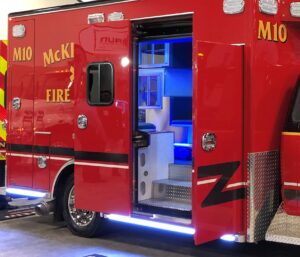
The sliding door design was introduced. The sliding door eliminated the traditional 32" door swing hazard, potentially into a traffic way or possibly blocking egress in a confined environment.
2015
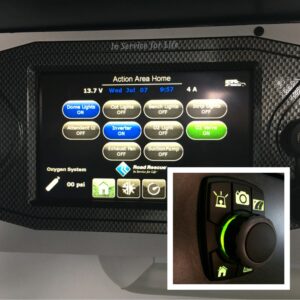
Road Rescue utilized the Vehicle Display Controller (VDC) operator interface device to assist with the Weldon V-Mux double-din, heads-up display. The VDC featured an optical rotary encoder for scrolling through menu options and a center push button for selecting options. The joy stick was also preprogrammed for momentary push-and-hold functioning of the side scene lights (both sides) for viewing address numbers at night. The rear load lights also had this same function.
2016
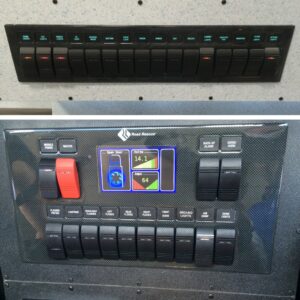
Introduction of a robust 12-volt printed circuit (PC) electrical system designed to deliver exceptional reliability, simplified diagnostics and long-term serviceability. By utilizing advanced printed circuit board technology, the system reduced wiring complexity, minimized connection points and enhanced overall electrical performance.
2018
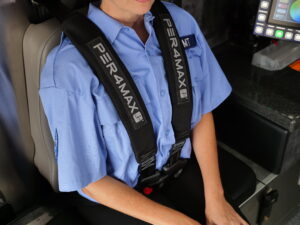
Introduced the Per4Max® multi-point restraint system which allowed the EMTs/paramedics to do their jobs, knowing they would be protected in the event of a collision. The 4-point restraint featured controlled deceleration technology and a single buckle for a single point of release.
2020
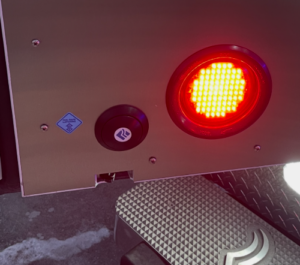
Introduced Fail-Safe latch, a pushbutton, fail-safe latching mechanism installed on all three entrance doors. In the event of an accident, if the door linkage and/or rotary door handles were damaged, they could be overridden to allow egress from the vehicle.
2021
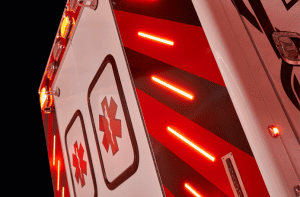
Rear chevron lights were introduced. Five angled LED lights were installed on each side of the rear entry doors with a combination of red and amber color within the same light heads. From the top, LEDs 1, 3 and 5 lit solid red when the OEM brakes were applied. LEDs 2 and 4 flashed amber when the corresponding OEM turn signals were applied.
2022
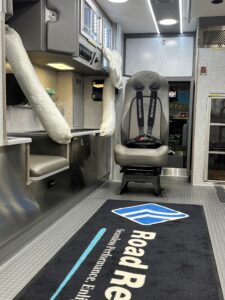
RollTek® was introduced as an optional upgrade. This special airbag system, combined with the exclusive Per4Max® multi-point restraint system, allowed EMTs/paramedics to do their jobs, knowing they would be protected in the event of a rollover. RollTek for Road Rescue was developed in partnership with IMMI®, a global leader in safety.
2023
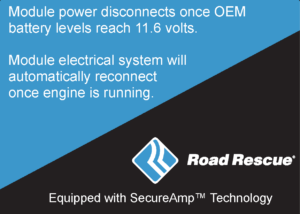
Patented SecureAmp™ module power technology was introduced. This technology ensured that the batteries were protected by automatically disconnecting parasitic loads once the voltage dropped below a certain threshold. If a Road Rescue emergency vehicle was sitting without the engine running, SecureAmp ensured that the battery was not fully discharged, and that the engine would turn over when it was time to answer the next call.
2024
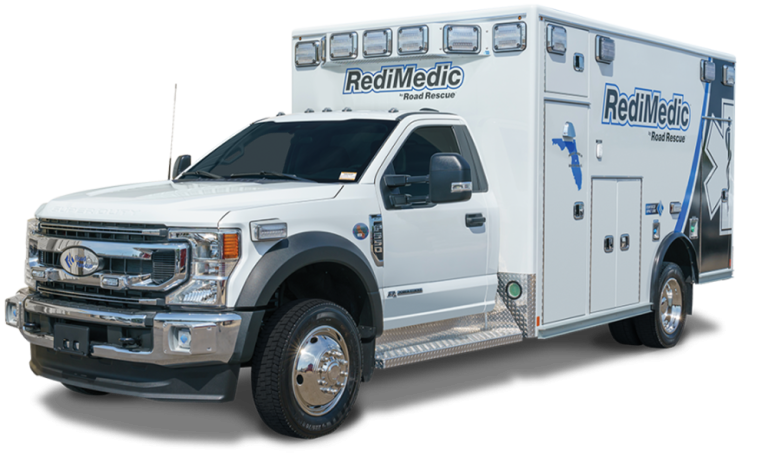
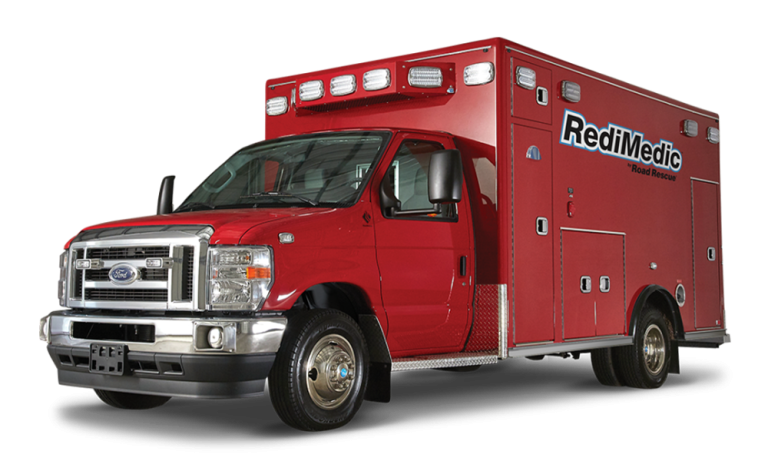
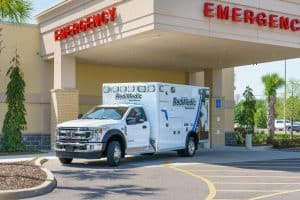
The RediMedic™ ambulance was launched. It offered the best of all worlds with an easy-to-spec, preconfigured design to provide optimal prehospital care. At the heart of every RediMedic ambulance is Road Rescue DNA, delivering seamless performance and robust safety features, such as the Per4Max® multi-point restraint system. With selectable options, this ambulance delivers an EMS-inspired interior that maximizes comfort, functionality and efficiency.
2025
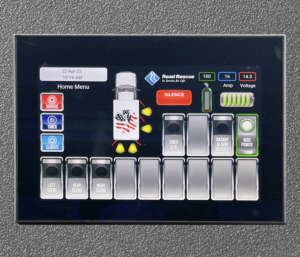
Smart Display 5.0 was introduced. The front and rear switch panels had stand-alone membrane switch panels that controlled life-saving functions in addition to a touchscreen display for non-life-saving functions. Easy-to-clean glass was rugged and scratch-resistant. The sealed enclosure was IP67 certified to be dust-tight and water-tight when immersed in water up to 1 meter deep for 30 minutes.
2026
Road Rescue celebrated its 50th anniversary.
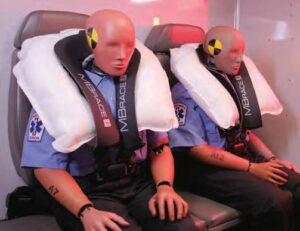
MBrace™ frontal collision and rollover airbag system was launched at FDIC as an option.
Road Rescue didn’t set out to make just any old ambulance. We combine REV engineering with an ISO-certified factory that’s brimming with the industry’s most advanced equipment. It’s where extrusions are laser sheared, welds are robotically made and wires are machine crimped.
Road Rescue’s tough-as-nails exterior isn’t just a façade. These ambulances are built street tough, and that durability runs layers deep. We engineered each one with chassis sill plates, WhisperQuiet™ insulation and a ladder frame subfloor that creates a one-of-a-kind foundation.
Road Rescue defies all industry standards with a long list of features that shatter the status quo, starting with the V-MUX multiplex system, which integrates multiple components through REV’s own exclusive controls. The relocatable device rail lets you configure the device’s location.

Vehicle Warranty Registration
The Road Rescue vehicle warranty helps you stay in service and protect your investment, call after call. Please note that your warranty will not go into effect until your registration information has been received by the Road Rescue team.